-
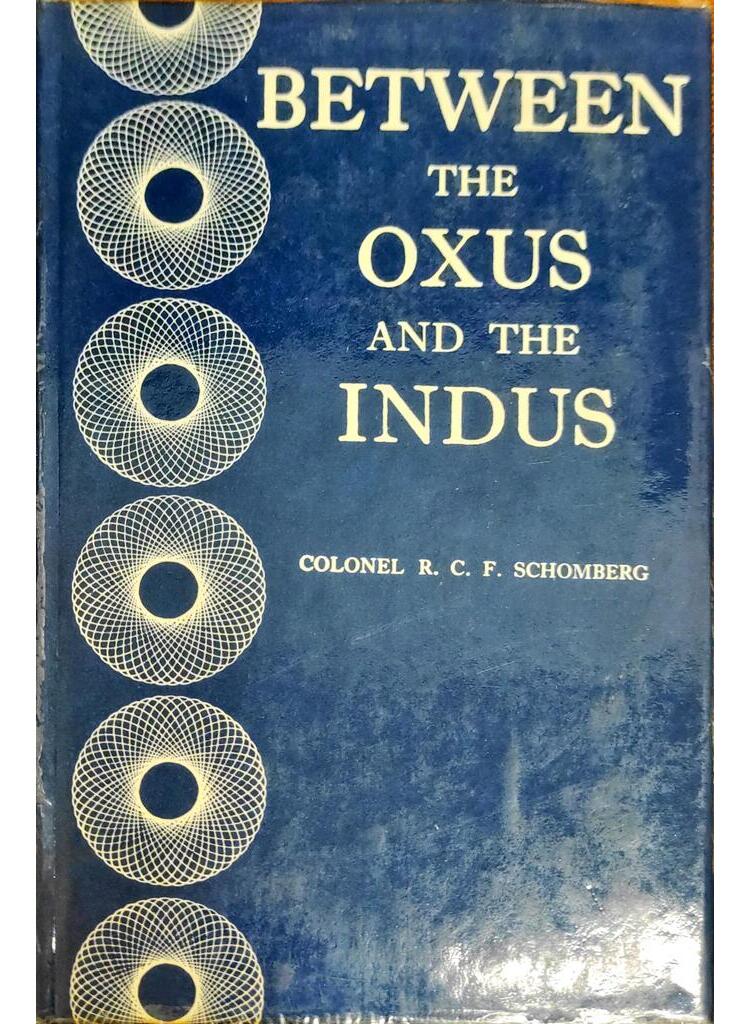
Between the Oxus and the Indus
06 000 FtTHE River Oxus rises in the snows of the Pamirs, in that remote region where Afghanistan joins China, and the two keep apart the territories of India and Asiatic Russia. The Oxus flows west till it reaches the Aral Sea, and at its source the mountains on its left are the boundary between British and Afghan territory. On the British side are the two States of Hunza and Ishkoman, both in the Gilgit political agency. The Indus, in its long and tortuous journey from Tibet to the Arabian Sea, leaves Baltistan and flows south, skirting the Gilgit Agency, and passing through the wild republics of Kohistan till it emerges at Attock in the comparative peace of the Punjab. Between the source of the Oxus in the north and the Indus in the south lies the Gilgit Agency, an appanage of the Maharaja of Kashmir and under the charge of a British political agent. In this distant and rugged region the mountains of the Karakoram, Hindu Icush and Pamirs unite and form an intricate network of glacier, peak and valley. In deep narrow valleys nestle villages where straightened fields are I I tended with endless labour, and thus a considerable population, which has preserved its customs and independence for centuries, is supported. In themselves these communities are often small and insignificant, but in the aggregate they form a considerable and varied population, which occupies an important and extensive part of the Frontier tracts of India. Indeed, the Gilgit Agency is one of the gates of India. It is possible for a man to go to the north of Hunza and stand in a place where he may look down into Afghanistan, on the source of the Oxus, with Soviet Russia beyond, and Chinese territory close on his right with the streams draining into Central Asia and finding their way to far Lop Nur, whilst behind him the melting snows send their water to the Indian Ocean. If this spectator be well mounted, he can leave Misgar, the most northerly village of Hunza, cross the frontier into Chinese territory, ride across that narrow tongue of land and over an easy pass and, if he has started early, he can reach Kizil Robat, the farthest post south-east of Bolshevist Asia, and do his shopping in a Russian bazaar. In the past eight years it has fallen to my lot to visit the Gilgit Agency a number of times and the following account has resulted from these journeys. Visitors are rare, and are not encouraged, since the economic situation has always to be watched. The garrison has to be victualled from Kashmir, with difficulty and expense. One of the chief anxieties is the scarcity of fodder, which makes transport dear and inadequate. For six months in the year, too, the Agency is cut off from India owing to the impossibility of crossing the high passes which lie on the route, whether from Kashmir or from the south. The Agency has some unpleasant neighbours in the disorderly republics that surround it, and the two valleys of Dare1 and Tangir, lands of blood-feuds and vendettas, are a constant nuisance to the officials. These two States are typical of the other republics that lie in Kohistan. These petty democracies are interesting but disagreeable survivals of a turbulent past, and have no attractions whatever, and certainly no virtues to justify their continuance as independent communities. These non-Pathan republics have failed to evolve any system of self-government. They have continued for generations wholly unable to govern themselves, heedless of their own chosen assemblies, and depending solely on the knife or the rifle to settle their difficulties or to avenge themselves. It is a state of affairs which the independent Pathan tribesmen would never tolerate. This book makes no pretence to being exhaustive or authoritative. It endeavours to give no more than an account of this remote region where life is still simple, and where many attractive customs survive. The following books have been of use to me, though one or two of them are, of course, quite out of date : In the Footsteps of Marco Polo by Clarence Dalrymple Bruce, The Marches of Hindustan by David Fraser, The Making of a Frontier by Colonel A. G. A. Durand, Political Frontiers and Boundary Making by Sir Thos. H. Holdich, Where Three Empires Meet by E. F. Knight, Chinese Central Asia, etc., by C. P. Skrine, Tribes of the Hindoo Koosh by Major J. Biddulph, Jammu and Kashmir by Frederic Drew, Among the Kara-Korum Glaciers in 1925, with Contributions by Ph. C. Visser, by Jenny Visser, Results of a Tour in Dardistan, Kashmir, Little Tibet, Ladak, Zanskar, etc., by G. W. Leitner. I wish to express my thanks to my friend Mr. David McLean for the help that he has given in preparing my book for publication.
Honterus Antikvárium és Aukciós Ház